 Book a Repair
Home Machines Sage / Sage Steam Wand Not Working? Weak or No Steam
Sage guide
SAGE STEAM WAND TROUBLESHOOTING
Sage steam wand not working or low pressure? What to check first
Is your Sage steam wand spluttering, producing steam from only some of its holes, or taking much longer to heat milk? On an automatic milk system, you might instead notice steaming stopping before the milk reaches its selected temperature.
Start with the removable steam tip—not automatically with a descale. Milk residue can restrict the small openings, and even a partial blockage can affect milk texturing. Cleaning those openings is a sensible first check before assuming the pump, boiler or another internal component has failed.
This guide covers Sage machines with steam wands, including the Bambino range, Duo Temp Pro, Barista range, Oracle range and Dual Boiler, plus Sage-built Nespresso Creatista machines. The basic checks are similar, but tip designs, cleaning routines and automatic milk controls differ by model.
Before you start: when to stop using the machine
Stop using the machine if it trips your home electrics, smells burnt, develops a new abnormal noise, or appears to be leaking steam or water internally. Switch it off and unplug it if safe to do so.
Do not keep resetting the circuit breaker or repeatedly running the steam function to see whether it clears. An unresolved internal leak or electrical fault can cause further damage. Our repair records include an Oracle with a leaking boiler and mains-tripping symptoms—not a problem that steam-tip cleaning would resolve.
Before removing or handling the steam tip, let the machine cool fully. Keep your hands and face clear during any subsequent purge: pressurised steam can still be released after switching off. Never check steam temperature with your hand.
If you are not comfortable carrying out external cleaning, leave it to a qualified repairer.
Jump to a section
1. Remove the steam tip and check every hole
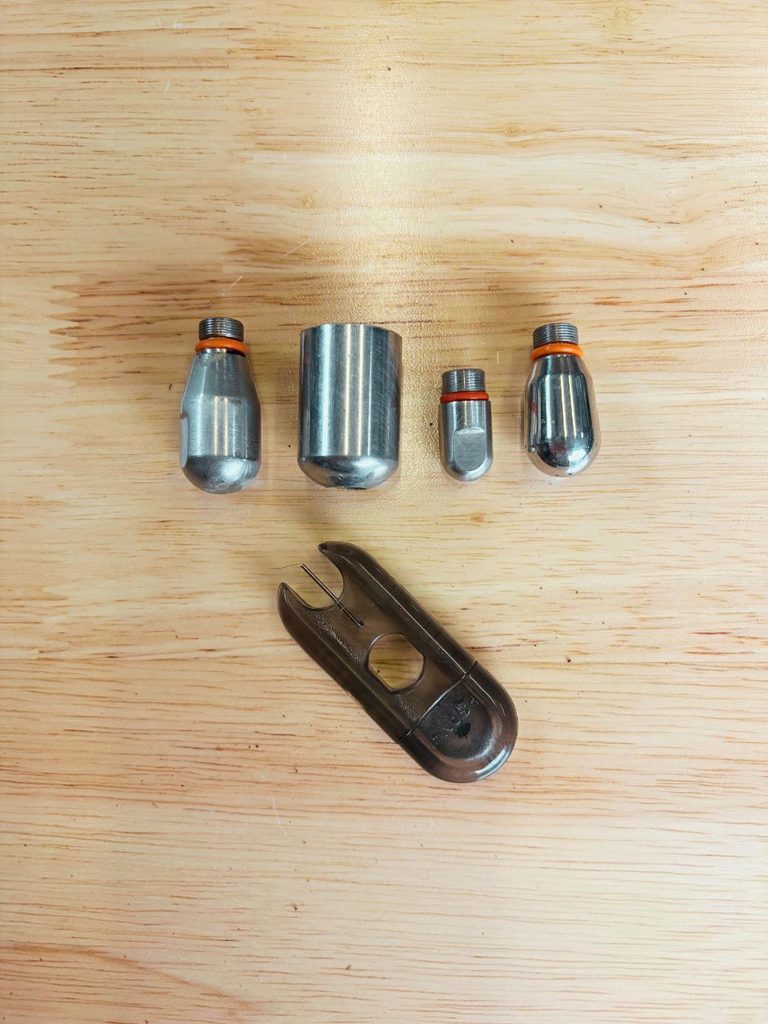
With the machine switched off, unplugged and cool, remove the steam tip using the method and cleaning tool specified for your model. Remove only the user-removable tip—not the wand assembly or the machine casing.
Here is the check we recommend from our workshop experience:
Look through the wide, threaded end of the detached tip towards the small outlet holes, with a light behind them. Rotate and angle it so you can inspect each opening. On a tip with a clear sightline, you should be able to see light through the holes.
A tip can look clean on the outside while still containing dried milk or loose debris inside.
Use the supplied cleaning pin to clear the openings gently. Hold the tip so the small holes face towards you and the wider opening points away. Push the pin through each small hole towards the wider cavity, keeping your fingers clear. This moves loosened debris into the cavity where it can fall out, rather than leaving it packed into the outlet.
Then turn the wide opening downwards and gently tap it onto a cloth-covered surface to dislodge loose material. Rinse the tip and inspect it again.
Do not force an oversized needle through the holes or try to drill them larger.
2. Check whether cleaning the tip restores the steam
Refit the cleaned tip correctly, then make one short test using your machine’s normal steam or cleaning controls. Keep the wand pointed safely into the supplied metal milk jug or the position specified in the manual.
At FMCM, comparing flow with and without the tip can help distinguish a blocked outlet from a problem further inside the machine. Steam escaping freely without the tip, but becoming restricted once it is fitted, points towards the tip or its fit. It is a useful clue, not a pressure measurement.
For a home tip-off test, follow a tip-off purge only where your model’s cleaning instructions provide for it. Otherwise, refit the tip before testing.
Do not assume all automatic machines enter manual mode in the same way. For example, the Barista Touch and Oracle Touch use different button actions. Manual milk texturing also disables the normal automatic temperature shut-off, so you must remain with the machine and stop it yourself.
If there is still no output, stop the test. Do not leave the steam function running in the hope that pressure will force a blockage through.
What if the tip blocks again?
In our workshop experience, material further up the wand can sometimes reach the tip after its holes have been cleared. That can explain why steaming improves briefly and then becomes restricted again.
A more thorough milk-residue clean is the next sensible step. Repeatedly poking out the same holes without cleaning the wand may not address the source.
3. Use milk-wand cleaner for stubborn milk residue
Milk-wand cleaning and descaling do different jobs. Milk-wand cleaner targets milk residue; descaler targets mineral deposits from water. The products are not interchangeable.
For compatible models, use a purpose-made product such as Sage milk wand cleaner.
Prepare it in the supplied milk jug at the dilution stated on the packaging. Follow your model’s cleaning procedure for soaking the removable tip and wand, any steam activation, and the final rinsing. Do not put milk-wand cleaner into the water tank.
Give the cleaner its specified contact time—do not replace a soak with a long continuous steam run.
Where a guided steam-wand cleaning programme is available, use it. On the Creatista Plus, for example, this is under Maintenance → Clean Steam Wand.
Afterwards, let hot parts cool before handling them, rinse thoroughly, refit the tip and complete the required fresh-water purge. Wipe the outside with a clean damp cloth.
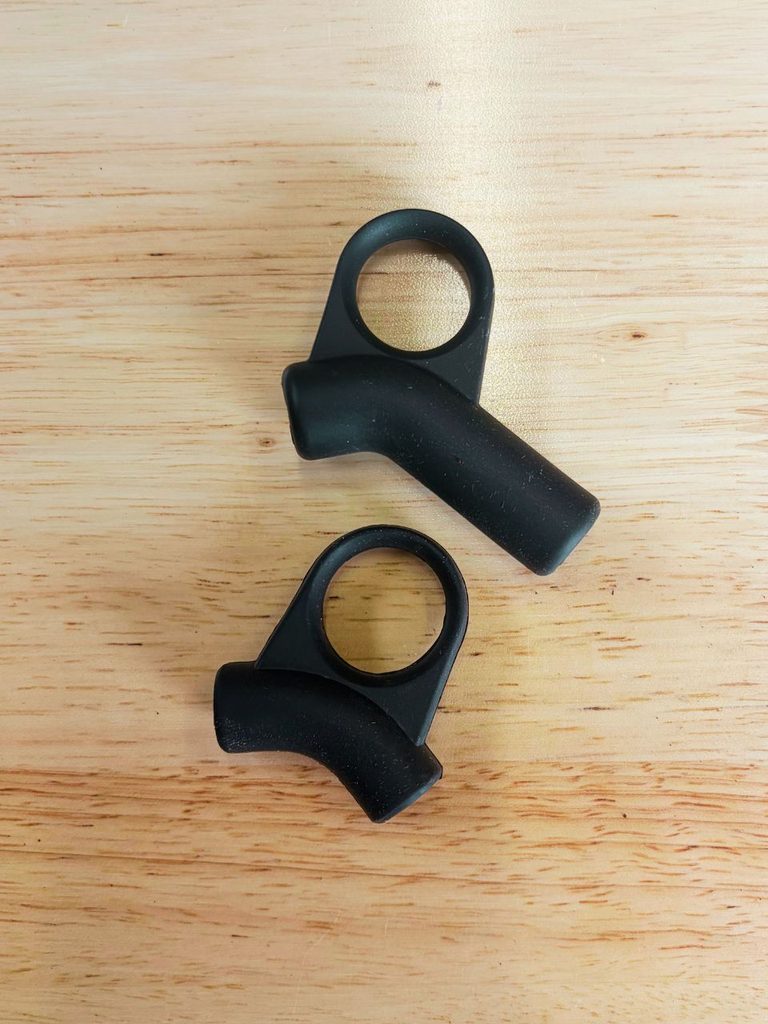
If your model has a rubber grip identified as removable for cleaning, this is also an opportunity to clean underneath it while everything is cool. A spritz of water makes it easier to pull off
4. Descale when the symptoms suggest a water-system restriction
From our workshop experience, descaling is more relevant when steam performance has gradually deteriorated, especially if the hot-water outlet has also become weak or unusually spluttery.
That combination can suggest a restriction beyond the steam tip. It does not, by itself, prove that scale is the cause.
For compatible Sage espresso machines, we recommend Sage coffee machine descaler, mixed and used according to the product and machine instructions. Complete the full procedure, including its rinsing stages.
Do not substitute an improvised overnight soak or a stronger mixture. For Nespresso Creatista machines, follow the Nespresso instructions and specified descaling product for the exact model rather than assuming another Sage machine’s routine applies.
Descaling is not a remedy for mains tripping, a burning smell or an internal steam leak. If cleaning has not restored any steam output, or the machine cannot complete its normal functions, arrange an inspection rather than running repeated cycles.
When the symptom needs a different approach
Automatic steaming stops before the milk is hot
On automatic milk models, an early stop does not necessarily mean the steam itself is too cool. A restricted tip, milk-temperature sensing issue or another steam-system fault can interrupt the process.
Check the selected milk settings, the jug position and the steam tip. Where your model has an exposed jug-temperature sensor, keep its surface clean and do not force or remove it. Sensor locations vary—do not assume every automatic Sage machine uses the same arrangement. Nespresso’s Creatista guidance specifically includes checking jug position, temperature settings and blocked tip holes when milk is not hot enough.
Our workshop notes also include a Touch Impress symptom where steam stops after a few seconds while the pump continues running. That is why “it cuts out” should not automatically be diagnosed as a dirty nozzle.
The machine keeps reporting a blocked steam wand
Clean the tip thoroughly and refit it correctly first.
From our workshop experience, persistent blocked-wand complaints sometimes require a replacement tip, particularly where its openings or condition have deteriorated. Cleaning will not restore a damaged tip’s shape.
However, a repeated warning is not proof that the tip needs replacing. If it returns after proper cleaning, the steam system needs checking rather than repeated resets.
Steam comes from the group head or another unexpected outlet
Distinguish an unexpected outlet from the machine’s normal automatic purge into the drip tray.
If steam is repeatedly going somewhere it should not when you select steaming, stop that function. Our technicians consider restrictions and water-direction valves among the possible causes. A correctly performed descale may help a scale-related restriction, but it will not repair a failed valve.
Steam escaping from inside the casing is a stop-use symptom, not an invitation to keep descaling.
An Oracle or Dual Boiler never finishes heating
A machine that remains stuck warming up—for example, around 70°C instead of becoming ready—is a different problem from steam escaping through only some tip holes.
The classic Oracle, Oracle Touch and Dual Boiler machines need their boiler heating and water-level systems to work correctly. FMCM’s inspection process for these machines includes checking boiler temperature and water-level probes for leaks, alongside internal pressure testing.
Cleaning the tip will not resolve a failure to reach operating temperature. The Oracle Jet is different: it uses ThermoJet heating, so do not apply a boiler-machine diagnosis to it simply because it has “Oracle” in its name.
A real workshop example: cleaning was not the missing step
An Oracle owner reported that the steam had stopped working despite carrying out the cleaning advice they had been given.
Our technician’s subsequent repair notes identified a steam valve that needed replacing.
That is the distinction this guide is intended to help with: external cleaning is worth trying, but it cannot repair a failed internal component. Once the sensible cleaning checks have been exhausted, more cleaning is not always the answer.
How we investigate a steam fault at FMCM
We begin by opening and inspecting the machine before running it, so we can look for internal leaks and electrical damage first.
We then check the affected functions, the route water takes through the machine, its valves, blockages and pump pressure. On automatic milk systems, we also assess temperature sensing and, where fitted, the air system responsible for aerating the milk.
Our internal service procedures include pressure testing and checks for escaping water or steam—not simply another descale with the casing closed.
In our experience, weak or failed steam is usually repairable and often makes economic sense to repair. It is not, on its own, a reason to replace your coffee machine. The final recommendation depends on the actual fault and the machine’s overall condition.
Prevent the next blockage: wipe and purge after every use
Do not wait until the next morning to clean the wand. Wipe away milk residue and complete the machine’s normal purge immediately after steaming. On automatic-purge models, let that purge finish. Nespresso’s maintenance guidance likewise stresses cleaning the wand after each use, before lowering it for the automatic rinse.
Keeping the outside shiny is only part of the job—the small outlet holes need to stay clear too.
Manufacturer instructions referenced in this guide
Use the instructions for your exact model when removing the tip, selecting manual steam, using cleaning products or descaling.
Still getting weak steam or cold milk?
If the tip is clear, the correct cleaning routine has not helped, or the machine is showing any stop-use symptoms, the next step is a proper inspection.
When booking your Sage coffee machine repair, tell us the model, what happens when you select steam and which cleaning checks you have already completed.
Book your Sage coffee machine repair
Tell us what is happening and we will help you choose the right repair route.